Pay in installments of $5.74 with
 ,
,
 and
and

Shipping Estimate
USA
- USA
- CAN
- USA
- CAN
Ships within 48 hours · Estimated delivery Jul 2 - Jul 7
 Promo Codes Available:
For Your Every Summer RSVP, with Code: SUMMER15
Description
american chestnut seeds for planting American ChestnutPhonetic: kas TAN nee uh den TAY ta Trees in pots are unavailable for shipment *Chestnut Blight can spread to Oaks, Red Maples, Sumac and Shagbark hickories. 1 Gallon Pot 2 2. 5' American chestnut was once one of the dominant and most ecologically important trees of the eastern North American forests. It thrives in full sun where moisture is moderate but drainage is good. The species is adaptable to a range of soil texturesfrom sandy to loamyand was
Phonetic: kas-TAN-nee-uh den-TAY-ta
Trees in pots are unavailable for shipment
*Chestnut Blight can spread to Oaks, Red Maples, Sumac and Shagbark hickories.
1 Gallon Pot- 2-2.5'
American chestnut was once one of the dominant and most ecologically important trees of the eastern North American forests. It thrives in full sun where moisture is moderate but drainage is good. The species is adaptable to a range of soil textures—from sandy to loamy—and was historically a key component of mixed hardwood forests. Although it can tolerate some shade in its youth, the American chestnut requires abundant sunlight to reach its full height and vigor as it matures.
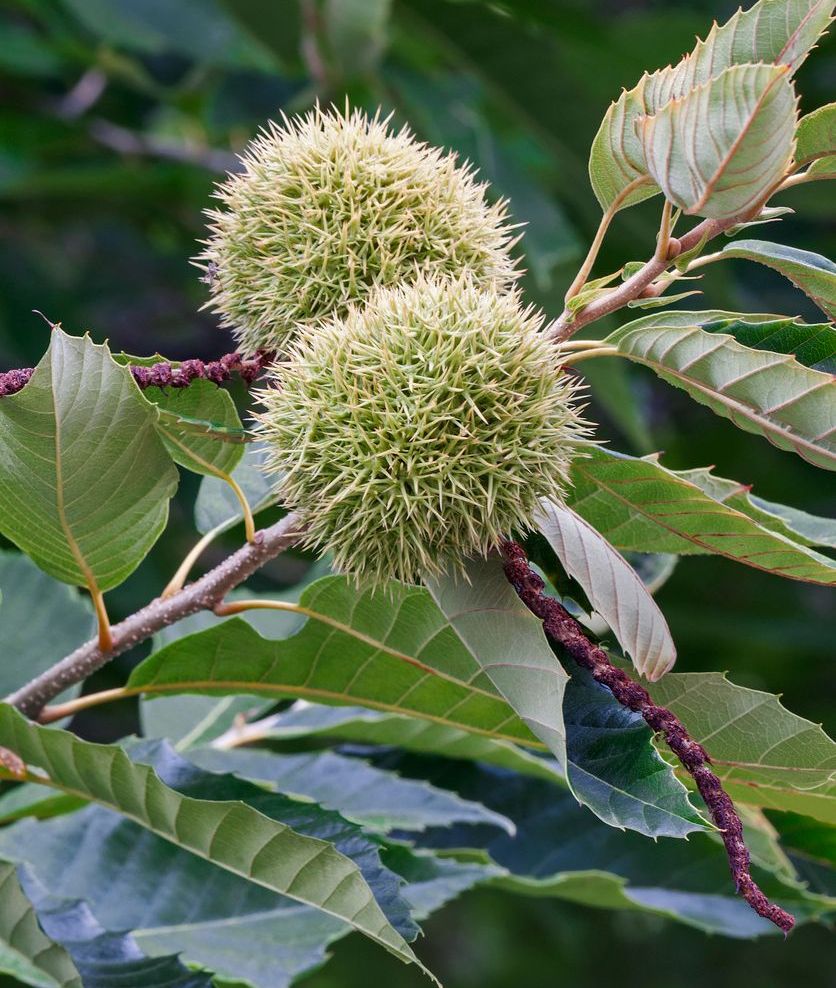
The American chestnut is a Native Perennial tree that typically blooms in early to mid-summer, usually in June. It produces long, creamy-white catkins that contain both male and female flowers on the same tree. Pollination is primarily by wind, though insects, including bees, also visit the fragrant blossoms. By late summer to early fall, the female flowers develop into large, spiny burs that ripen and split open around October to reveal two to three shiny brown nuts. These nuts are nutrient-rich and were once a critical autumn food source for wildlife, as well as a valuable crop for humans.
Ecologically, American Chestnut played a keystone role in eastern deciduous forests before being devastated by the chestnut blight in the early 20th century. It is an important host plant for numerous species of butterfly and moth, such as the Luna Moth, American Dagger Moth and the Banded Hairstreak. Its abundant nuts sustained countless species, including bears, deer, squirrels, turkeys, and other birds. The tree’s flowers provided nectar and pollen for native bees and other pollinators, while its tall canopy and fast growth contributed to forest structure and soil enrichment through leaf litter. Even today, surviving root sprouts and restoration efforts continue to support local ecosystems, offering food and habitat where possible.
- Hardiness Zone: 5-8
- Native Region: BONAP Map
- BONAP Map Key Color Guide: Map Color Key
- Sun Exposure: Full Sun
- Flower Color: Yellow
- Bloom Time: June, July
- Soil Type: Medium, Medium Dry
- Mature Plant Size: 50-75'H, 50-75'W
- Plant Spacing: 30-40'
- Host Plant: Banded Hairstreak, Luna Moth, American Dagger Moth
- Attracts: Bees, Butterflies, Birds
- Advantages: Drought Tolerant, Poor Soil Tolerant
- Landscape Uses: Borders
- Companion Plants: Spicebush, Elderberry, Christmas Fern, Blue Wild Indigo
Shipping Notes
- Free Standard Shipping on $100+ Orders to the USA.
- Except Preorder products are shipped in 48 hours.
- Delivery to the USA:
- Standard Shipping : 3-10 business days
- If time is of the essence, please consider selecting expedited delivery for faster service.
Exchange/Return Notes
- We offer a 30-day return/exchange service after receiving.
- Final sale items are not eligible for returns or exchanges.
- To process your return/exchange, please contact us at [email protected]
- Please click here for more details>>> Return & Exchange Policy